Evaluating the Juneteenth 1865 PNG for Modern Creative Projects
As digital design becomes increasingly accessible, creators ranging from hobbyists to small business owners face a constant stream of choices regarding asset formats. When preparing materials for Juneteenth celebrations, the decision often comes down to selecting the right file type that balances historical respect with technical utility. The Juneteenth 1865 PNG has emerged as a specific category of digital resource designed to meet these dual needs. Unlike generic clip art or low-resolution web images, this format is engineered for versatility across various mediums, from apparel to home décor. Understanding the distinct characteristics of this file type helps users determine if it aligns with their specific project requirements or if an alternative format might serve them better.
Defining the Format and Its Distinct Advantages
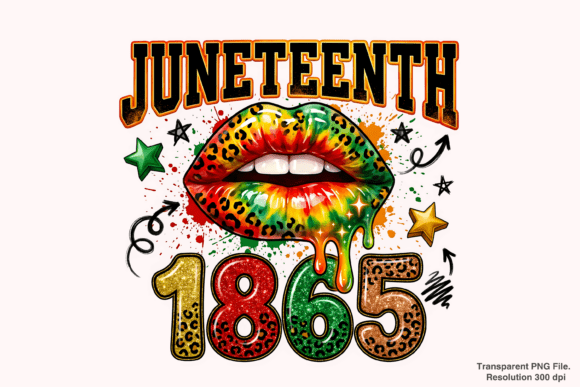
At its core, a Juneteenth 1865 PNG is a raster image file featuring the "Portable Network Graphics" extension. What sets a premium version of this file apart from standard internet downloads is the combination of resolution, transparency, and color fidelity. A high-quality specimen in this category typically offers a resolution of 300 DPI (dots per inch). This metric is critical because it distinguishes print-ready assets from screen-only graphics. While a 72 DPI image may look acceptable on a smartphone, it will appear pixelated and blurry when printed on a t-shirt or a mug. The 300 DPI standard ensures that the intricate details of the design—whether typography, symbolic imagery like the star of Texas, or vibrant color gradients—remain crisp even at larger dimensions, such as the common 12 × 12 inches provided in premium packages.
Furthermore, the transparent background is a defining feature that separates professional-grade PNGs from JPEGs. A JPEG file always includes a solid white or colored box around the image, which can be difficult to remove without leaving artifacts. In contrast, the Juneteenth 1865 PNG allows the design to float seamlessly over any background color or texture. This is particularly valuable for sublimation projects on dark-colored tumblers or for layering designs onto patterned tote bags. The ability to integrate the graphic without a bounding box gives the final product a polished, custom look that feels less like a sticker and more like an inherent part of the item.
Comparative Analysis: PNG Versus Other Digital Formats
When evaluating resources for commemorative projects, it is essential to weigh the Juneteenth 1865 PNG against other common formats like SVG, EPS, and JPEG. Each serves a different purpose, and the "best" choice depends entirely on the intended output method.
- PNG vs. JPEG: As noted, the primary difference lies in compression and transparency. JPEGs use lossy compression, which degrades image quality every time the file is saved. For a historical observance where visual clarity matters, the lossless nature of the PNG format preserves the integrity of the colors and lines. If a user plans to create greeting cards or wall art where the image sits on a plain white background, a high-res JPEG might suffice, but the PNG remains superior for versatility.
- PNG vs. SVG/EPS: Vector formats (SVG, EPS) are mathematically defined and can be scaled infinitely without losing quality. They are ideal for large-scale signage or vinyl cutting machines. However, vector files require specific software knowledge to edit and often lack the complex shading, gradients, and textured effects that a high-resolution PNG can display. If the Juneteenth 1865 design involves watercolor effects, photorealistic elements, or intricate glow effects, the PNG format captures these nuances better than a vector equivalent. Additionally, many heat press operators prefer PNGs for direct-to-film (DTF) transfers because the raster data translates predictably to the printer.
The trade-off here is scalability versus detail. If a creator needs to blow an image up to the size of a billboard, a vector file is necessary. However, for the vast majority of consumer applications—such as hoodies, mugs, stickers, and standard posters—a 12 × 12 inch, 300 DPI Juneteenth 1865 PNG provides more than enough resolution. At 300 DPI, a 12-inch image contains 3600 pixels across, which is substantial for most commercial printing needs.
Practical Applications and Best-Fit Scenarios
The utility of this specific digital asset extends across a wide array of creative endeavors. For individuals launching small business products, the immediate availability of a high-resolution file reduces the turnaround time between concept and sale. Because the file is ready for instant download, there is no waiting period for shipping physical proofs, allowing entrepreneurs to list items like trendy t-shirts and sublimation projects quickly.
In the realm of sublimation, the vibrant color profile of a premium PNG is crucial. Sublimation dye turns into gas under heat and bonds with polymer coatings. If the source image is dull or low-resolution, the final product on a tumbler or mousepad will reflect those flaws. A clean, vibrant design quality ensures that the reds, blacks, and greens associated with Juneteenth symbolism pop against the white coating of the substrate. Similarly, for DIY crafts involving iron-on transfers or sticker production, the sharp edges provided by the transparent background prevent the "halo" effect often seen with cheaper graphics.
Home décor applications also benefit significantly from this format. Whether printing on canvas for wall art or creating custom invitations for community gatherings, the 300 DPI resolution ensures that text remains legible and graphical elements do not break up. Users should note, however, that while the file is compatible with most design software—including Canva, Adobe Photoshop, Illustrator, and Procreate—the final output relies heavily on the user's hardware. A common limitation is not the file itself, but the monitor calibration and printer settings. Colors may vary slightly due to these factors, a reality inherent to all digital printing that users must account for by ordering test prints before committing to large batches.
Decision Factors: When to Choose This Resource
Selecting the Juneteenth 1865 PNG is a strategic decision based on project scope and technical capability. This option is ideally suited for users who need a balance of ease of use and professional results without the steep learning curve of vector manipulation. It is the right choice when:
- Speed is a priority: The "ready for instant download" aspect eliminates lead times, making it perfect for last-minute event preparations or rapid prototyping of merchandise.
- The design relies on complex visuals: If the artistic vision includes gradients, shadows, or textured overlays that vectors struggle to render smoothly, the raster-based PNG is superior.
- Versatility is required: One file that works for both a small sticker and a medium-sized poster simplifies inventory management for sellers.
Conversely, this format may not be the optimal solution if the project requires infinite scalability, such as wrapping a vehicle or printing a building-sized banner. In those rare cases, sourcing a vector version of the same design would be necessary. Additionally, users who intend to drastically alter the fundamental shape of the graphic might find vector paths easier to manipulate than raster pixels, although modern photo editing tools have largely bridged this gap for moderate edits.
Final Considerations for Informed Creation
Ultimately, the value of a Juneteenth 1865 PNG lies in its ability to facilitate meaningful expression through high-quality execution. By providing a transparent, high-resolution foundation, it empowers creators to focus on the message of freedom and history rather than troubleshooting technical glitches. Whether the goal is to produce commercial goods for a marketplace or personal items for family celebration, understanding the specifications—300 DPI, transparent background, and 12 × 12 dimensions—ensures that the final result honors the significance of the date with the professionalism it deserves. Users are encouraged to verify their specific printer capabilities and conduct small test runs to ensure color accuracy, thereby maximizing the potential of this versatile digital resource.